Vande Bharat chair car and sleeper trains: first run, versions, speeds, number of services and fleet targets, from PIB.
UPSCSSCRRBFacts as of 5 November 20261 min read
In 60 seconds
Vande Bharat is India's semi-high-speed train set, built in India.
The first train ran on 15 February 2019 on New Delhi-Kanpur-Prayagraj-Varanasi.
The design maximum speed is 160 kmph; Vande Bharat 2.0 is designed for 180 kmph.
PIB said 162 chair car services (81 pairs) were running as of July 2026.
The first Vande Bharat Sleeper, Howrah-Kamakhya, began regular running on 22 January 2026.
For your exam
For UPSC, Vande Bharat fits under Make in India and infrastructure in GS 3. Use the fleet targets and the shift to sleeper trains as examples of rail modernisation.
SSC GK asks first-route and first-year questions most often. Remember: 2019, New Delhi to Varanasi, built by ICF Chennai.
RRB papers ask about the first route, the year, the manufacturer (Integral Coach Factory, Chennai) and the top speed. Keep the latest count of services handy and update it when PIB releases new figures.
What Vande Bharat is
Vande Bharat is a self-propelled train set: the motors are spread under the coaches, so there is no separate locomotive. This lets it speed up and slow down faster than a loco-hauled train, which cuts journey time on routes with many curves and stops. The first rakes were built at the Integral Coach Factory (ICF), Chennai.
Versions
Version
Key point
Vande Bharat Express
First run 15 February 2019; designed for 160 kmph
Vande Bharat 2.0
First run 30 September 2022 on Gandhinagar-Mumbai Central; designed for 180 kmph, operated up to 160 kmph
Vande Bharat 3.0
Reaches 100 kmph from standstill in about 52 seconds
Vande Bharat Sleeper
16 AC coaches, about 823 passengers; trials touched 180 kmph on Kota-Nagda
Network today
By December 2025, Vande Bharat services covered 274 districts and had carried more than 7.5 crore passengers. In July 2026, PIB reported 162 chair car services running as 81 pairs, plus sleeper services. The same release lists six chair car pairs that serve Bengaluru.
The sleeper train
The first Vande Bharat Sleeper, Howrah-Kamakhya (27575/27576), began regular running on 22 January 2026. PIB estimated the trip at about 14 hours against about 17 hours for the Saraighat Express. See the In the news section below for newer sleeper routes.
Targets
The Railways plan about 800 Vande Bharat trainsets by 2030 and about 4,500 by 2047, depending on infrastructure and manufacturing capacity.
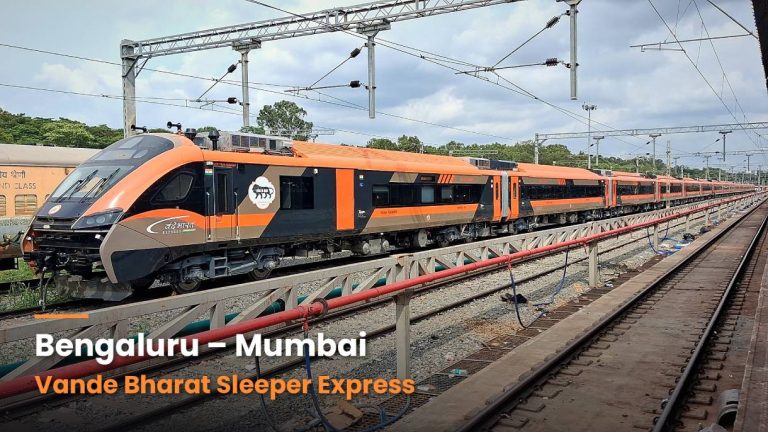
The third Vande Bharat Sleeper route links SMVT Bengaluru with CSMT Mumbai overnight, with stops at Raichur, Yadgir, Wadi and Kalaburagi in North Karnataka.