
UNEP Adaptation Gap Report 2026: developing countries need about $305 billion a year by 2035
Exam update for UPSC aspirants
·3 min read
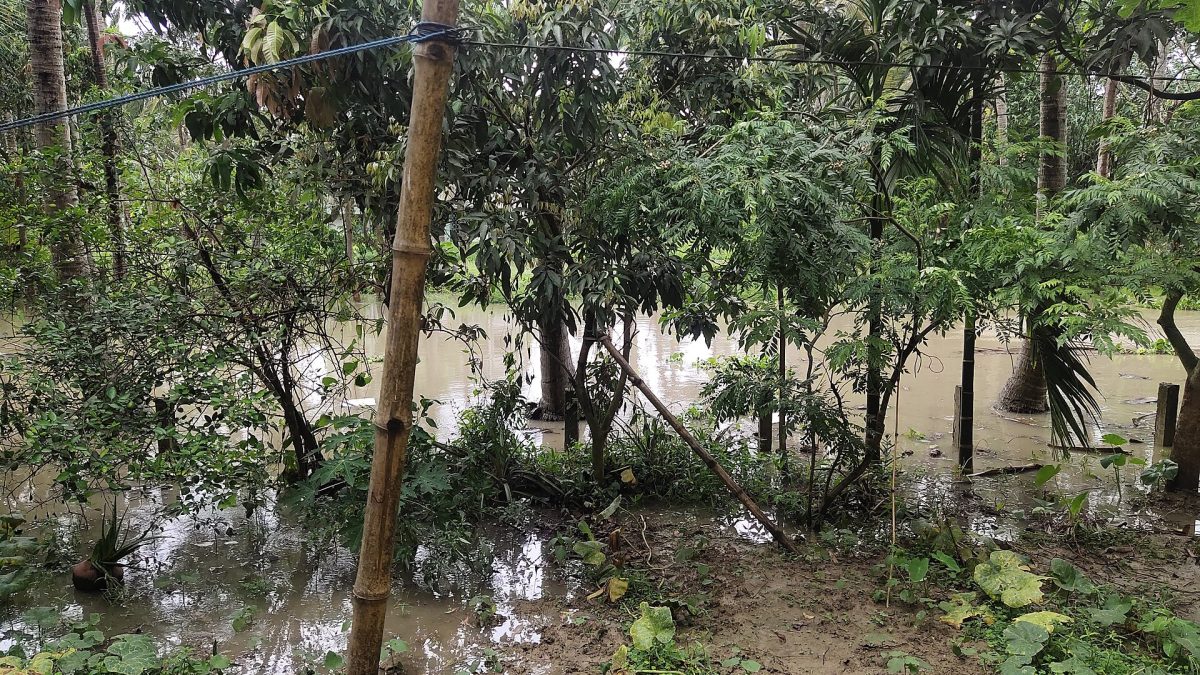
Photo: Janasayan0508, via Wikimedia Commons (CC BY-SA 4.0) · Source
The UN Environment Programme (UNEP) released its 2026 Adaptation Gap Report on Wednesday, 4 November 2026, warning that finance to help communities adapt to climate change falls far short of needs as global warming is set to exceed 1.5 degrees Celsius.
The report was highlighted by UN News ahead of COP31, the UN climate conference that opens the following week in Antalya, Türkiye.
What happened?
The report’s main estimates, as reported by UN News, are:
- Developing countries will need about $305 billion a year by 2035 to build resilience to climate change.
- International public adaptation finance was only $28.2 billion to $31.7 billion in 2024, roughly $1 billion more than the previous year, and its growth is flattening.
- Even if adaptation finance is tripled, as agreed at COP30 in Brazil, projected funding of $85 billion to $120 billion a year would cover only 20 to 29 per cent of estimated needs.
- The $305 billion estimate excludes private-sector needs, so actual needs could double.
UNEP Executive Director Inger Andersen said the world is not ready to adapt, and that nations will need to go even higher than tripling finance to save lives and protect economies.
Background and context
Adaptation means adjusting to the effects of climate change, such as heatwaves, floods and droughts, as opposed to mitigation, which reduces greenhouse gas emissions. UNEP’s Adaptation Gap Report tracks the difference between what developing countries need for adaptation and the finance actually provided. At COP26 in Glasgow, countries set a goal of providing $40 billion for adaptation by 2025, and at COP30 in Brazil they agreed to triple adaptation finance.
Glasgow goal and south-south finance
The report says countries could still meet the COP26 goal of $40 billion by 2025. It also notes that south-south adaptation finance flows rose from $3.8 billion in 2019 to $9.6 billion in 2024.
WHO's call on health resilience
The UN News article also reported that the World Health Organization (WHO) urged countries to scale up six climate-resilience measures, which it says could save 1.6 million lives a year. These include:
- Heatwave early warning systems
- Climate-resilient water and sanitation
- Cleaner household cooking and heating fuels
WHO also called for fossil fuel prices to reflect the damage they cause to health.
Why is this important?
The report shows that even the COP30 tripling pledge would meet less than a third of adaptation needs in developing countries. With COP31 about to open in Antalya, the size of this gap, and who pays to close it, is likely to shape negotiations on climate finance. For countries such as India that face heat, floods and droughts, adaptation finance affects how quickly resilient infrastructure, early warning and health systems can be built.
Exam relevance
UPSC relevance
Relevant to GS Paper III (Environment, climate change) and Prelims. Note the difference between adaptation and mitigation, the report’s $305 billion annual need by 2035, the 2024 public finance range of $28.2-31.7 billion, the COP26 Glasgow $40 billion goal, the COP30 tripling pledge, and COP31’s venue in Antalya, Türkiye.
Key takeaways
- UNEP's Adaptation Gap Report 2026, released on 4 November 2026, says developing countries need about $305 billion a year for adaptation by 2035.
- International public adaptation finance was $28.2-31.7 billion in 2024, about $1 billion more than in 2023.
- Tripling adaptation finance, as agreed at COP30, would provide $85-120 billion a year, covering only 20-29 per cent of needs.
- South-south adaptation finance rose from $3.8 billion in 2019 to $9.6 billion in 2024.
- WHO says six climate-resilience health measures, such as heatwave early warning, could save 1.6 million lives a year.
- COP31 opens in Antalya, Turkiye, in the week after the report's release.
More for UPSC
 Environment & Ecology
CBD COP17 in Yerevan adopts the ‘Yerevan Pathway’ to speed up action on global biodiversity targets
·4 min read International Relations
MINURSO ends after 35 years as UN Security Council fails to renew Western Sahara mission
·4 min read Current Affairs