
MINURSO ends after 35 years as UN Security Council fails to renew Western Sahara mission
Exam update for UPSC aspirants
·4 min read
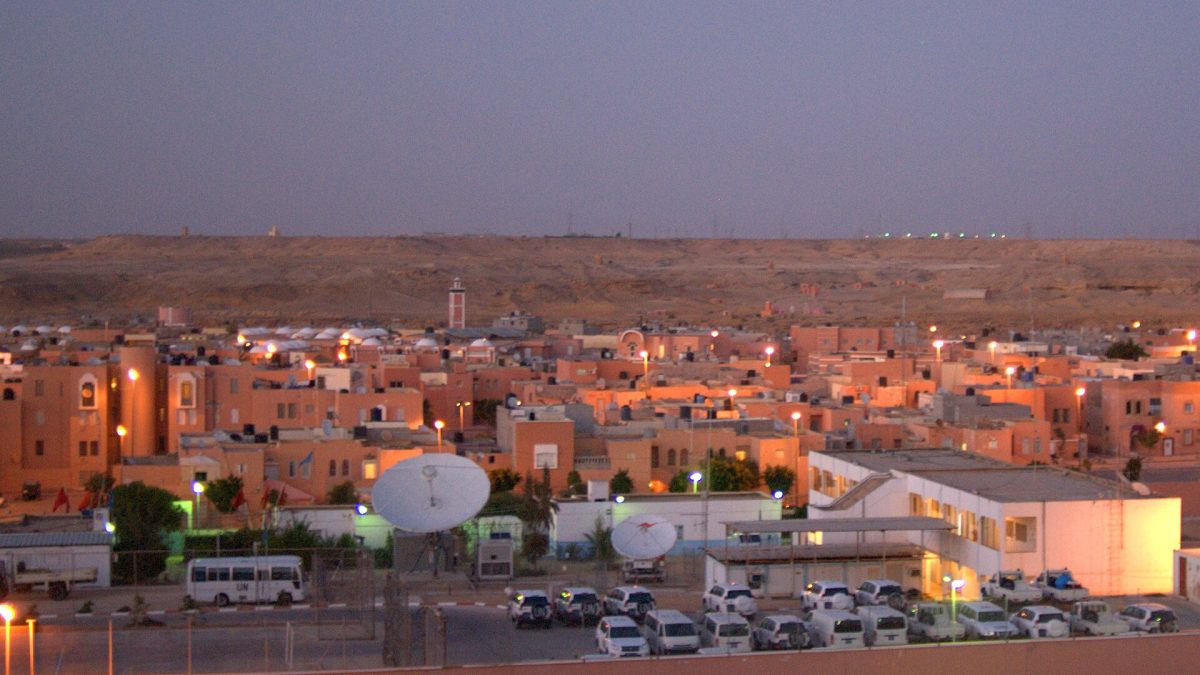
Image: cingularite, via Wikimedia Commons (CC BY-SA 2.0) · Source
The mandate of the UN Mission for the Referendum in Western Sahara (MINURSO) expired at midnight on Saturday, 31 October 2026, after the UN Security Council failed to agree on extending it. On Sunday, 1 November 2026, UN Secretary-General António Guterres said in a statement delivered by his Spokesperson that the UN remains committed to a just, lasting and mutually acceptable political solution that provides for the self-determination of the people of Western Sahara.
The end of one of the UN’s longest-running peacekeeping missions is a significant development for international relations and UN peacekeeping.
What happened?
On Friday, 30 October 2026, the Security Council could not agree on MINURSO’s future. A draft resolution put forward by the United States was vetoed by Russia. A rival Russian text, which proposed a one-year extension of the mandate to 31 October 2027, did not get the nine votes needed for adoption in the 15-member Council.
The Secretary-General’s statement said that the mission’s departure does not take away the people’s right to self-determination, and asked all parties to respect and promote the rights of the people of Western Sahara. He also said he remains concerned about the security situation and the risk of hostilities escalating, and urged all concerned to exercise maximum restraint.
The UN will continue to work towards a peaceful resolution through the Secretary-General’s Personal Envoy for Western Sahara, Staffan de Mistura.
Background and context
MINURSO was established in 1991 under Security Council resolution 690 (1991). It followed settlement proposals of the UN and the Organization of African Unity that Morocco and the Frente POLISARIO accepted in 1988. These proposals provided for a referendum in which the people of Western Sahara would choose between independence and integration with Morocco.
The referendum never took place, but MINURSO continued the tasks given to it by the Council, including helping to monitor the ceasefire. Hostilities resumed in 2020. In 2007, Morocco put forward an Autonomy Proposal as a basis for negotiations, which envisages the territory as self-governing under Moroccan sovereignty.
MINURSO at the end of its mandate
- Headquarters: Laayoune
- Team sites: nine (four west of the berm and five east of it)
- Liaison office: Tindouf
- Personnel: about 160 military observers and around 180 civilian and affiliated personnel, plus a dedicated mine action capability
- Head of mission: Special Representative for Western Sahara Alexander Ivanko
- Fatalities: 20 MINURSO personnel lost their lives during the mission's 35 years in the territory
What happens next
Sunday, 1 November 2026 marked the start of a liquidation period. A smaller team reporting to the UN Department of Operational Support will oversee the disposal of UN equipment. The Secretary-General asked the parties for full cooperation so that the process can be completed in an orderly way as soon as possible.
Positions in the Security Council
The US delegate said the US draft would have supported the principle of self-determination and called the status quo unacceptable. The Russian delegate said the US text would have imposed one-sided solutions, and explained Russia’s veto on that basis.
Why is this important?
The closure shows how a veto by a permanent member can end a long-running peacekeeping mission when the Council is divided. It also leaves the Western Sahara dispute, a long-standing conflict in North Africa, without a UN presence on the ground for ceasefire monitoring, while the political process continues through the Personal Envoy. The case is useful for understanding the Security Council’s voting rules, the self-determination principle and the limits of UN peacekeeping.
Exam relevance
UPSC relevance
Relevant to GS Paper II (International Relations: important international institutions, their structure and mandate). Useful points: MINURSO’s establishment under resolution 690 (1991), the veto power of permanent members, the nine-vote requirement for adoption of resolutions in the 15-member Council, the role of the Personal Envoy, and the Morocco 2007 Autonomy Proposal. Also useful for map-based questions on Laayoune and Tindouf.
Key takeaways
- MINURSO's mandate expired at midnight on 31 October 2026 after the Security Council failed to agree on its future.
- Russia vetoed a US draft; a Russian text for a one-year extension to 31 October 2027 failed to get nine votes.
- MINURSO was set up in 1991 under resolution 690 to organise a referendum on independence or integration with Morocco, which never took place.
- At its end, MINURSO had about 160 military observers and around 180 civilian and affiliated personnel, with headquarters in Laayoune.
- A liquidation period began on 1 November 2026 under the UN Department of Operational Support.
- Personal Envoy Staffan de Mistura will continue the UN's political efforts.
More for UPSC
 Environment & Ecology
CBD COP17 in Yerevan adopts the ‘Yerevan Pathway’ to speed up action on global biodiversity targets
·4 min read Environment & Ecology
UNEP Adaptation Gap Report 2026: developing countries need about $305 billion a year by 2035
·3 min read Current Affairs