What Article 371(J) says, which districts it covers, how the development board and local reservation work, and how it is tested in KPSC and UPSC.
UPSCKPSCFacts as of 5 November 20262 min read
In 60 seconds
Article 371(J) is a special provision for the Hyderabad-Karnataka region, now called Kalyana Karnataka.
It was added by the Constitution (Ninety-eighth Amendment) Act, 2012, which got the President's assent on 1 January 2013.
The President can give the Governor of Karnataka a special responsibility for the region.
It allows a separate development board, equitable funds, and reservation of seats and state posts for local people.
The region covers Bidar, Kalaburagi, Yadgir, Raichur, Koppal, Ballari and Vijayanagara districts.
The region was renamed Kalyana Karnataka in September 2019.
For your exam
For UPSC, place 371(J) with the other special provisions in Part XXI (Articles 371 to 371J). A common Prelims trap is matching each article to its state: 371 is Maharashtra and Gujarat, 371J is Karnataka. In Mains GS 2, use it as an example of asymmetric federalism and regional balance.
KPSC asks this in both Prelims (GS) and Mains (Karnataka-specific polity). Know the clauses, the districts, the board and how local cadre reservation affects state recruitment notifications. Many KPSC and KEA notifications carry a separate 371(J) quota, so read the eligibility section closely.
What the article says
Article 371(J) sits in Part XXI of the Constitution, among the temporary, transitional and special provisions. It lets the President, by order, give the Governor of Karnataka a special responsibility for the Hyderabad-Karnataka region. Under that responsibility the Governor can provide for:
a separate development board for the region, with a report on its working placed before the Legislative Assembly every year;
equitable allocation of funds for development expenditure in the region, subject to the needs of the State as a whole;
equitable opportunities in public employment, education and vocational training for people of the region.
Clause 2 goes further. An order can reserve a proportion of seats in educational and vocational training institutions in the region for students who belong to the region by birth or domicile. It can also identify posts under the State Government, and in bodies it controls in the region, and reserve a share of them for local people.
Why the region needed it
The districts of this region were part of the Nizam’s Hyderabad State before the 1956 reorganisation of states. They joined Karnataka with lower literacy, fewer institutions and weaker infrastructure than the rest of the State. A special provision was seen as a way to address that gap through dedicated funds and a local share in jobs and education.
Districts covered
The region originally had six districts: Bidar, Kalaburagi, Yadgir, Raichur, Koppal and Ballari. Vijayanagara district was carved out of Ballari in 2021, so the area today spans seven districts.
Timeline
Year
Event
2012
Parliament passes the Constitution (Ninety-eighth Amendment) Bill
1 January 2013
President’s assent to the Act
2013
Presidential orders set up the development board and local reservation
September 2019
Region renamed Kalyana Karnataka; the board becomes the Kalyana Karnataka Region Development Board (KKRDB)
2021
Vijayanagara district formed out of Ballari
How it shows up in recruitment
State recruitment notifications from KPSC, KEA and departments list a separate category for candidates with a 371(J) eligibility certificate issued by the competent authority. Posts in the local cadre of the region are filled mainly from such candidates, and region candidates also get a share of state-level posts. Always check the exact percentages and certificate rules in the notification you are applying to, as they are set by state orders and can be revised.
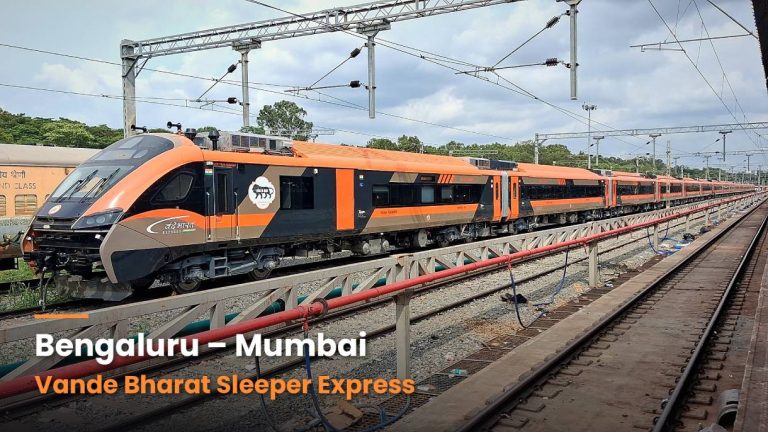
The third Vande Bharat Sleeper route links SMVT Bengaluru with CSMT Mumbai overnight, with stops at Raichur, Yadgir, Wadi and Kalaburagi in North Karnataka.